A Quick SEO Refresher
Before we get into the tools, it helps to understand what they are actually supporting.
SEO is how your website gets found by the right people at the right time. It covers how your pages are structured, how other sites link to you, and how well your site performs technically.
They will not replace solid SEO knowledge, but they will make the day-to-day work faster and more precise.
Chrome Extensions for Keyword Research and Analysis
Keyword research shapes everything else in an SEO campaign. These extensions bring search data into your browser so you can make quicker decisions without opening a separate tool every time.
1. Keywords Everywhere
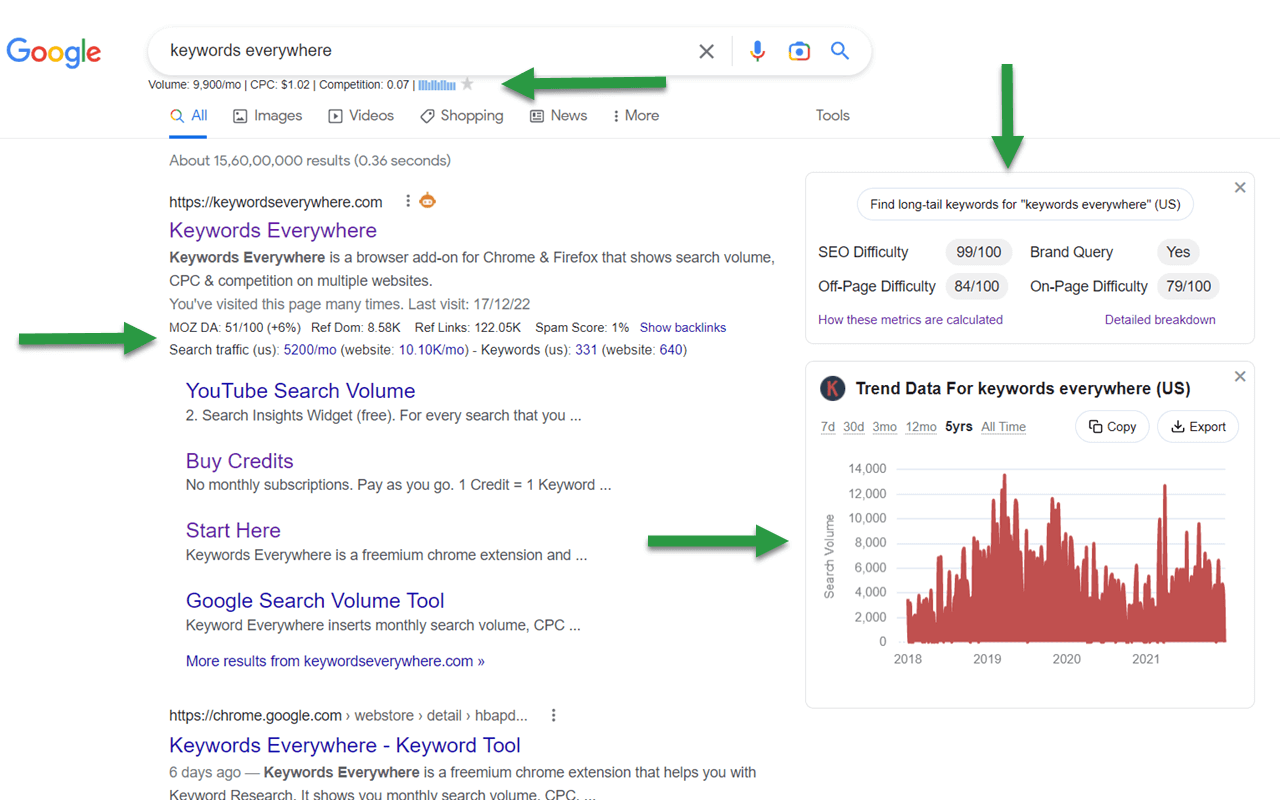
Keywords Everywhere displays search volume, cost-per-click, and competition data directly alongside Google search results. It also surfaces related keywords and “people also search for” data.
I mainly use it to get a quick read on the SERP while I am already searching. Rather than switching to a separate keyword tool, the data is right there on the results page as I browse.
2. SEOquake
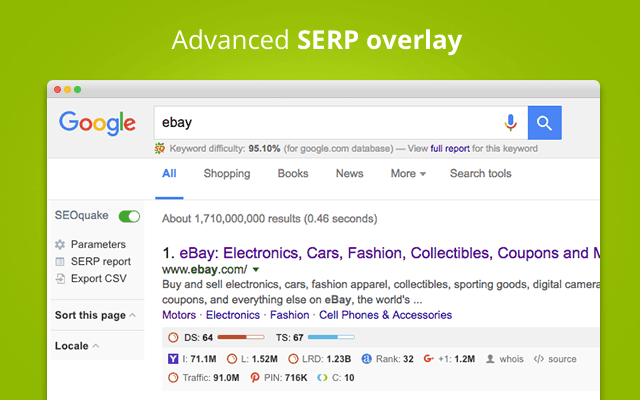
SEOquake shows key SEO metrics for any page or domain directly in your browser, covering keyword density, meta tags, and link counts in a single toolbar.
I use it mainly for competitor checks directly in the SERP. When a page is ranking well, I want to know how it is structured and what keywords it is targeting. SEOquake surfaces that without me having to open the page and dig through the source code manually.
3. Keyword Surfer
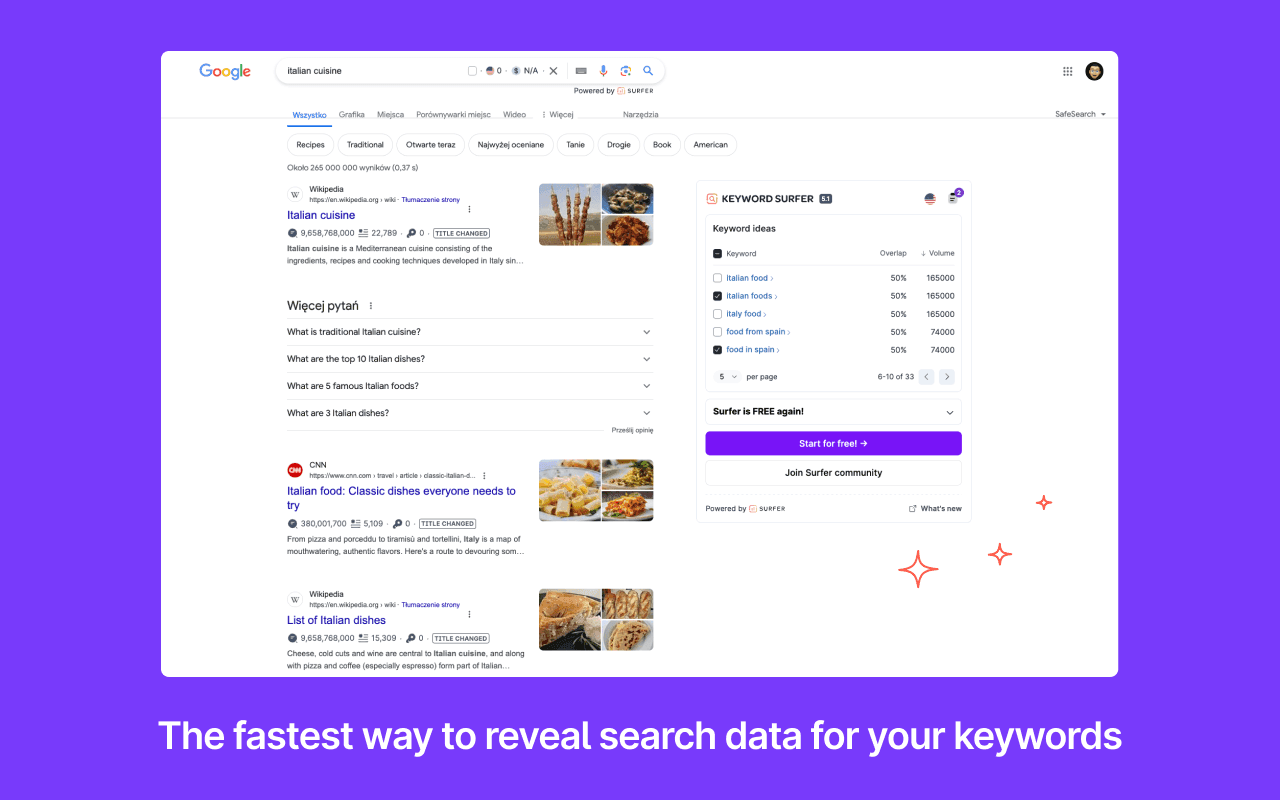
Keyword Surfer shows search volume and keyword suggestions directly in Google search results, along with word count and estimated traffic for pages already ranking.
What I find useful about it is the keyword ideation side. When I search a query, it shows me what related terms people are also searching for. That helps build out content ideas around what the audience is actually looking for.
4. Detailed SEO Extension
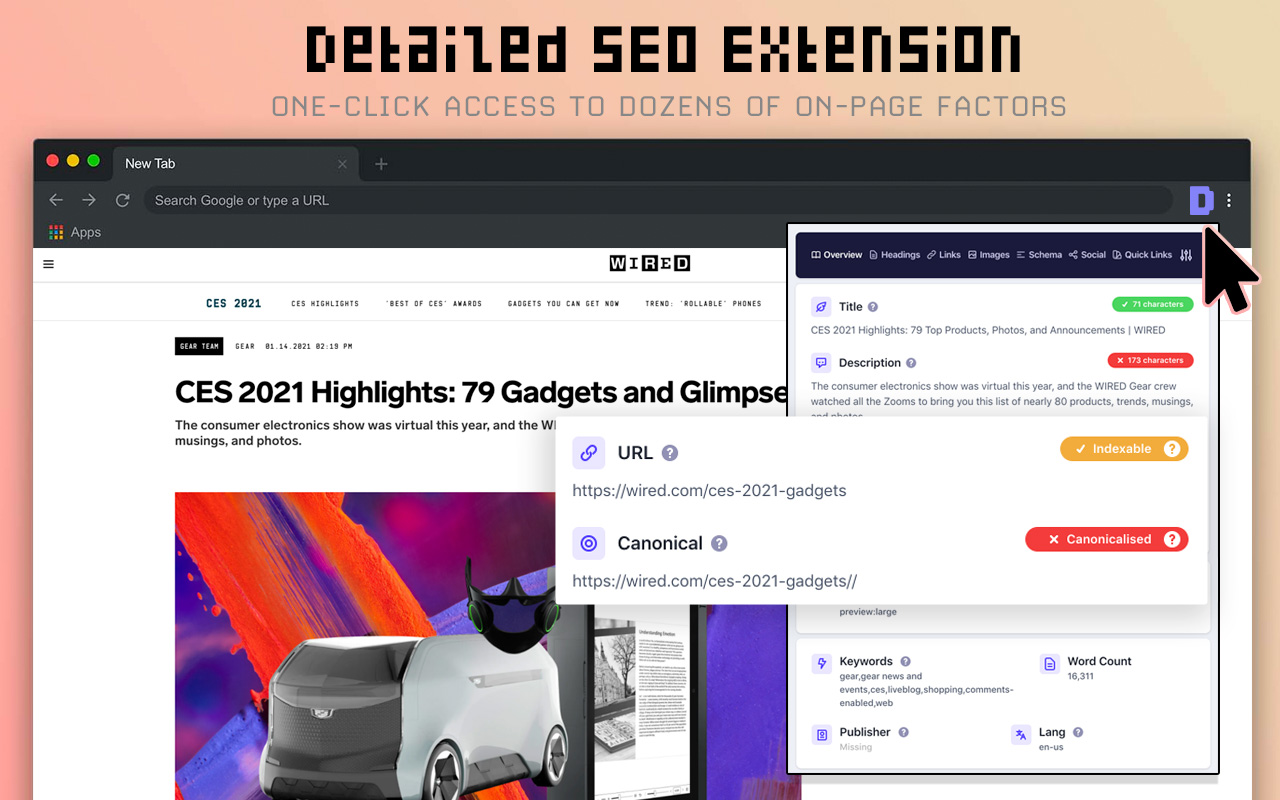
Detailed SEO Extension breaks down on-page elements including headings, meta tags, canonical tags, schema markup, and internal links for any page you visit.
Similar to SEOquake, I use it when I want a structured view of how a page is set up. It is particularly useful when checking heading hierarchy and meta tag setup quickly during a page audit.
Chrome Extensions for On-Page SEO
On-page SEO covers everything within the page itself. These extensions help you check and improve the elements that affect how search engines read and rank your content.
5. Plerdy (Personal Recommendation)
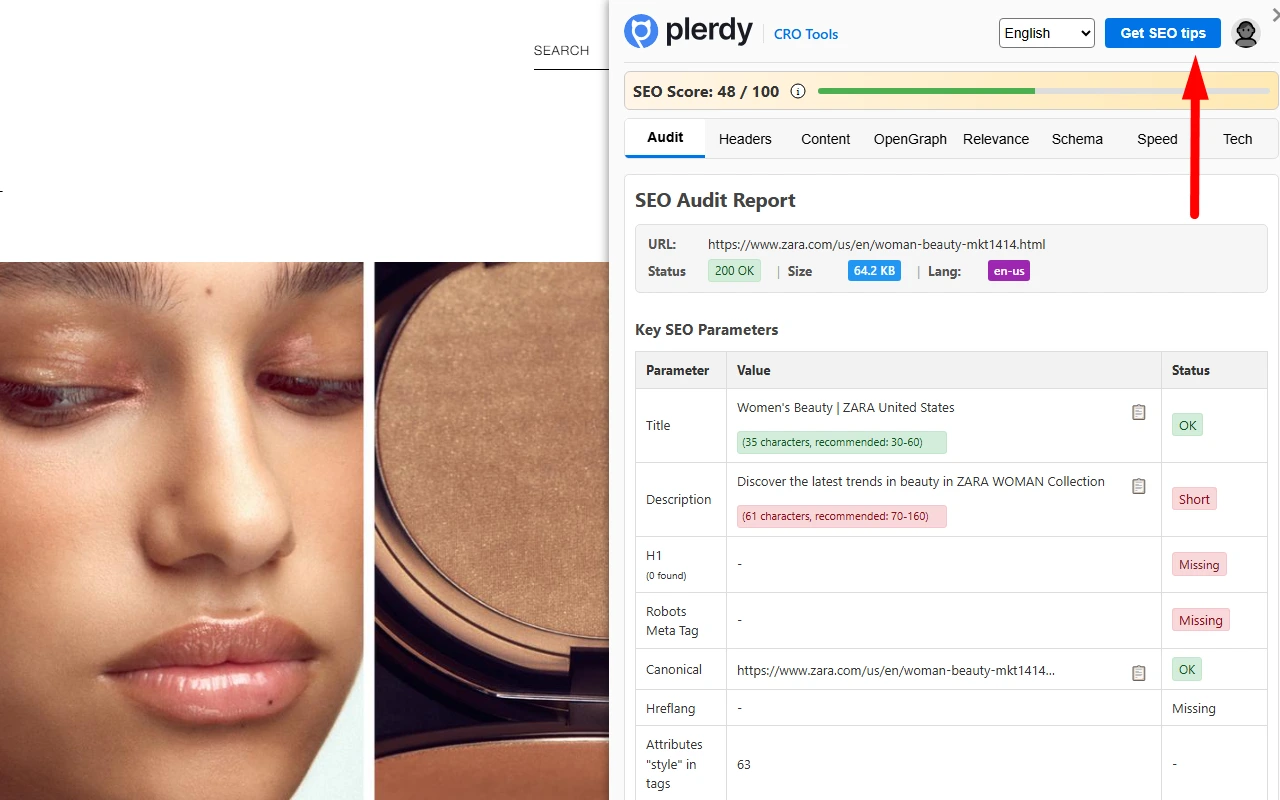
Plerdy audits a page across multiple dimensions including headers, content structure, OpenGraph tags, schema markup, and performance, all from a single panel.
When I open it on a client page, the first thing I check is the Headers tab to see the heading structure at a glance, then the Audit tab to confirm meta tags are set correctly. One thing I find particularly useful is that the panel stays open when switching between tabs, so when auditing multiple pages in a row I do not have to reopen it each time. It covers what would otherwise require several separate extensions, making it one of the most practical tools for day-to-day SEO work.
7. SEO Pro Extension
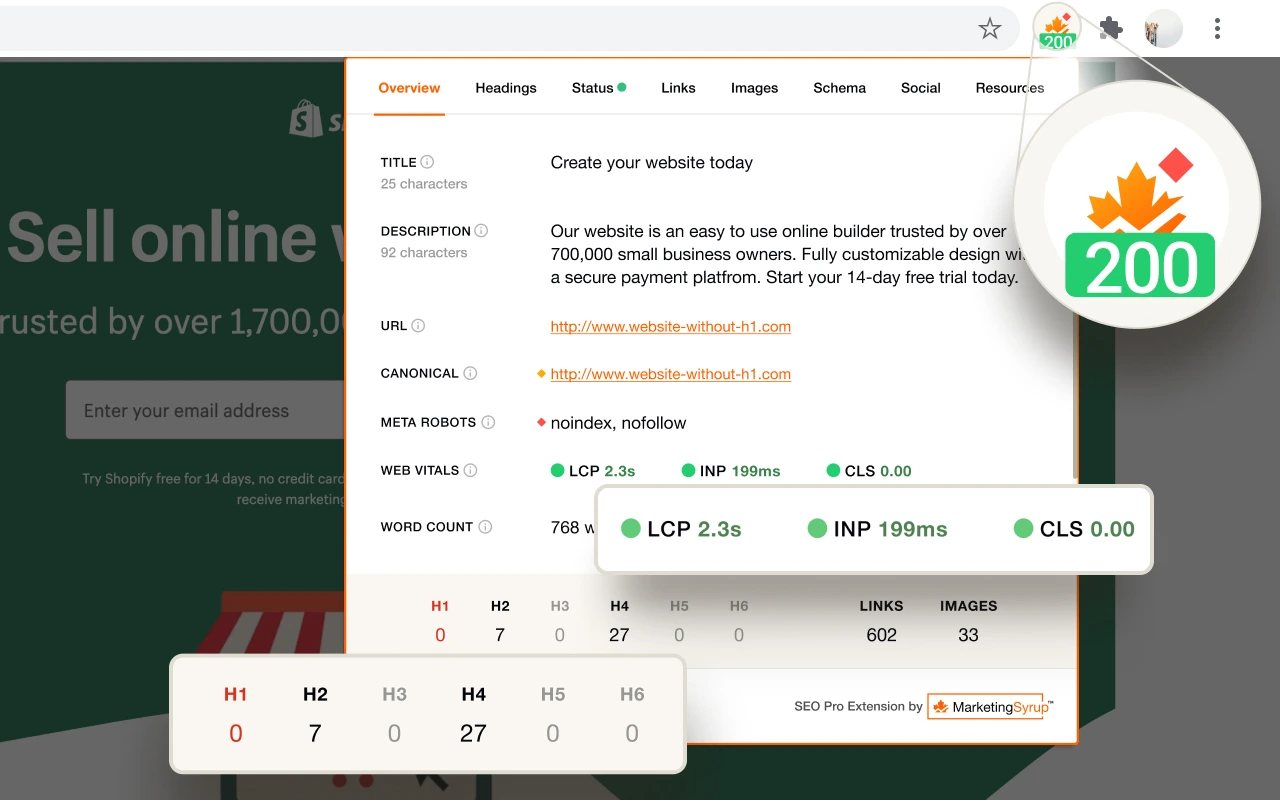
SEO Pro Extension gives a full page overview in a single panel, covering title and meta description, canonical tag, meta robots, Core Web Vitals, word count, heading structure from H1 to H6, link count, image count, and schema markup.
When I land on a page I need to audit quickly, SEO Pro is usually the first thing I open. It gives me a complete picture without needing to dig through the page source or run a separate crawl. For a quick check before starting client work, it covers most of what I need upfront.
8. Hemingway Editor
Hemingway Editor highlights sentences that are difficult to read, flags passive voice, and suggests simpler alternatives. Readable content keeps visitors on the page longer, which indirectly supports SEO performance.
For longer blog posts, I run the content through Hemingway before publishing. It is particularly useful when the content needs to be accessible to a non-technical audience who may not be familiar with SEO terminology.
9. Grammarly
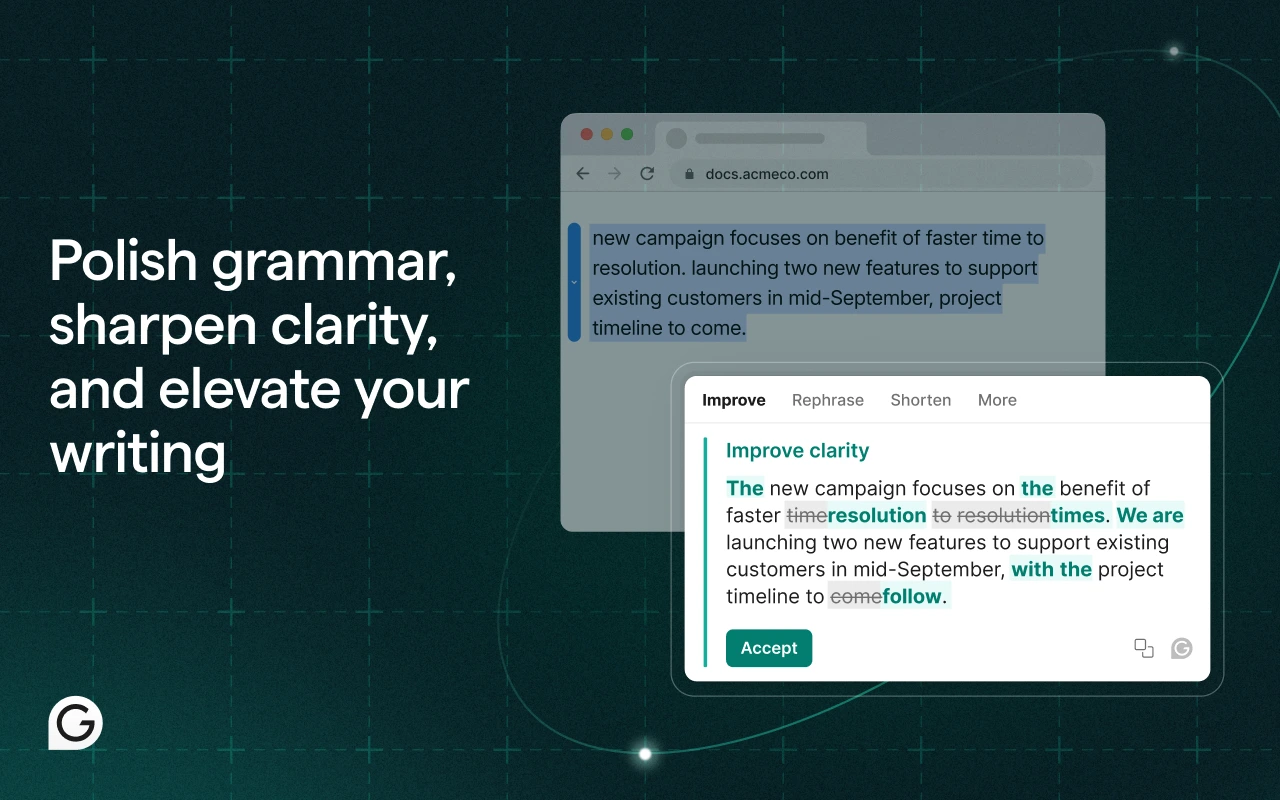
Grammarly checks spelling, grammar, and punctuation in real time across most text fields in Chrome. It runs in the background and catches errors in meta descriptions, page copy, and client communications without needing to be opened manually.
For day-to-day SEO work it is one of the lowest-effort tools on this list. It is always running and consistently useful across everything you write in the browser.
Chrome Extensions for Backlink Analysis
Backlinks remain one of the strongest ranking signals in SEO. These extensions let you assess link profiles and domain authority without leaving your browser.
10. Ahrefs SEO Toolbar
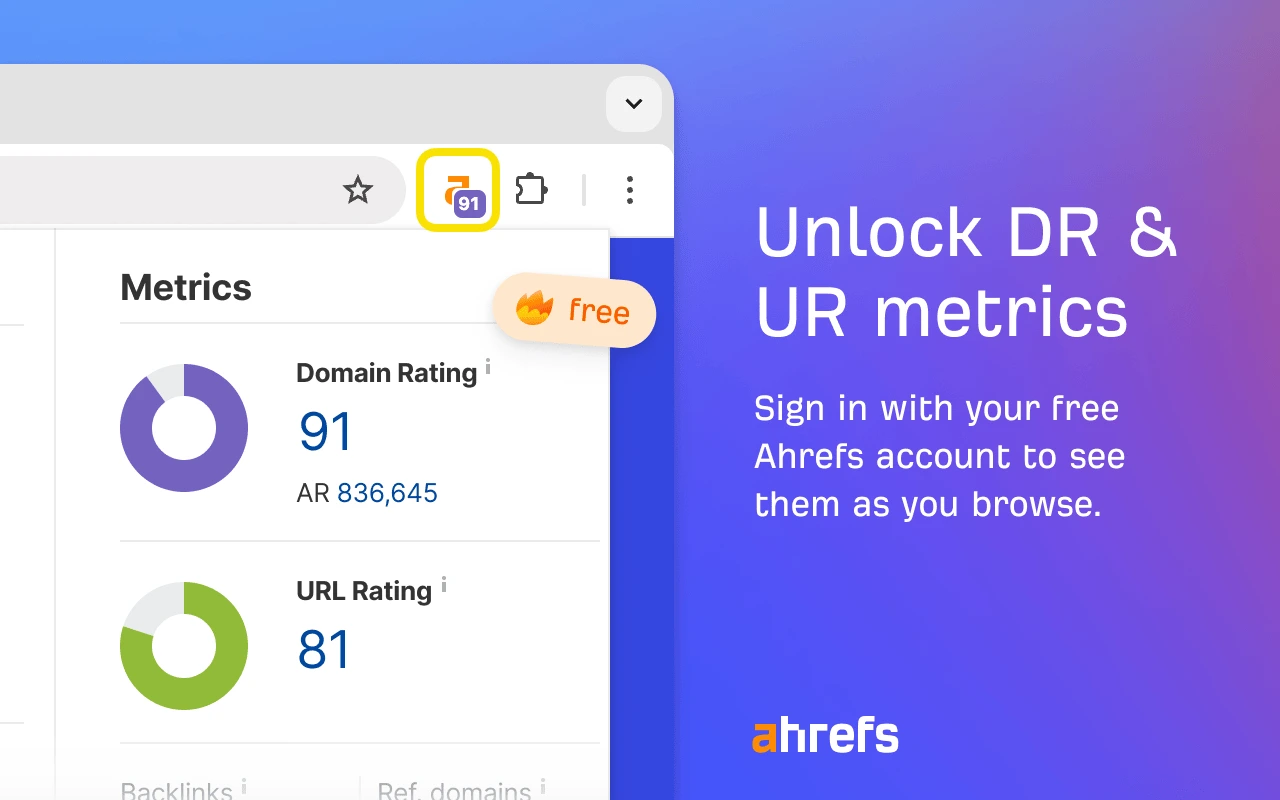
Ahrefs SEO Toolbar displays domain rating, URL rating, and backlink counts for any page or domain you visit. It also shows organic keyword data and estimated search traffic for the page.
I use it mainly when checking competitor pages directly in the SERP. Rather than opening the full Ahrefs platform, I can get a quick read on a site’s authority and backlink count while I am already on the results page. It is also useful when prospecting for link building targets to quickly assess whether a site is worth pursuing.
11. MozBar
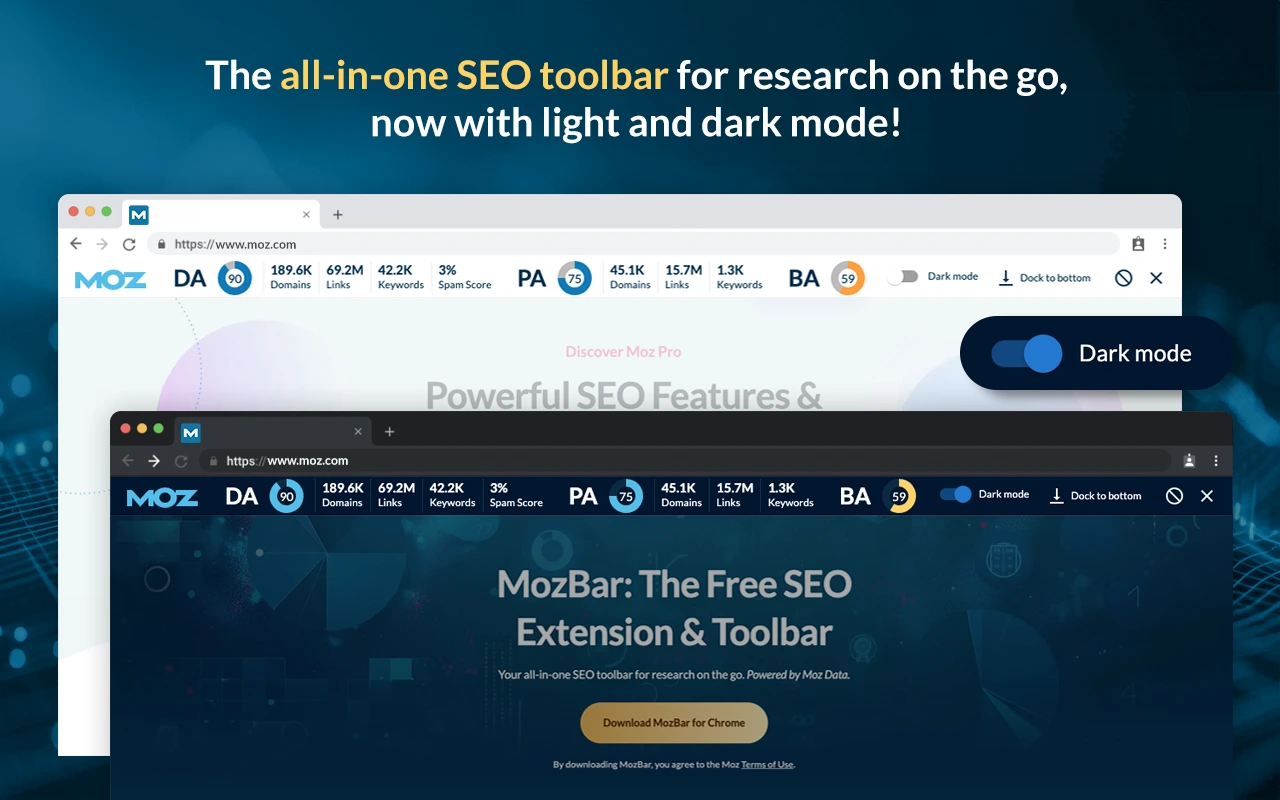
MozBar shows Domain Authority and Page Authority scores for any site directly in the browser. It also highlights followed and nofollowed links on the page, which is useful when evaluating potential link building targets.
I tend to use it alongside Ahrefs rather than instead of it. Different tools calculate authority differently, so cross-referencing both gives a more reliable picture. It also comes in handy when evaluating guest post opportunities to quickly check if a site has solid authority before reaching out.
12. Majestic Backlink Analyzer
Majestic provides Trust Flow and Citation Flow scores, which measure link quality and link quantity separately. That distinction is useful when doing a deeper backlink audit rather than a quick surface-level check.
I use this one less frequently than Ahrefs or MozBar, but it comes in handy specifically when I need to assess the quality of a site’s backlink profile rather than just the volume. If a site has a high Citation Flow but low Trust Flow, that is usually a sign the links are low quality regardless of the quantity.
Chrome Extensions for Technical SEO
Technical SEO covers the structural and performance elements that affect how search engines crawl and index your site. These extensions surface issues that are easy to miss without running a full audit.
13. Lighthouse
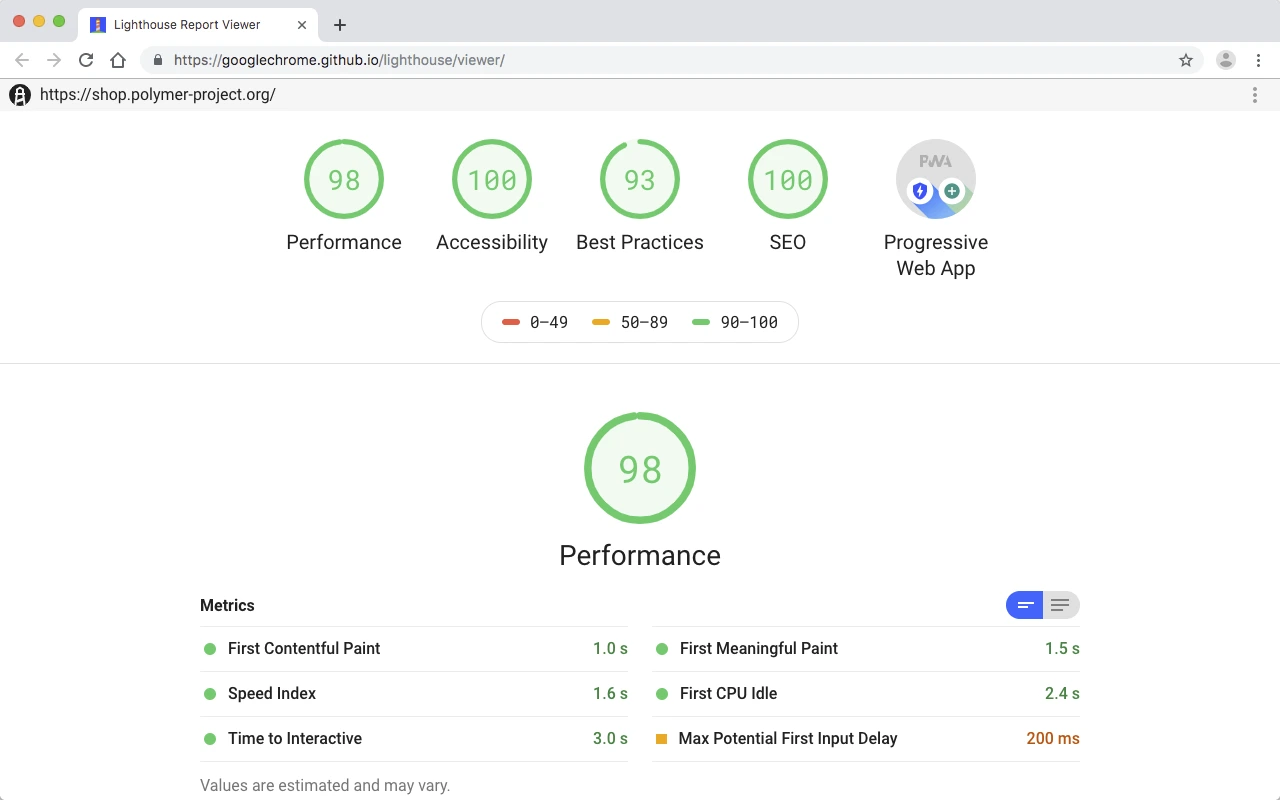
Lighthouse is Google’s own performance and quality auditing tool available as a Chrome extension. It generates reports covering page speed, accessibility, best practices, and SEO signals including meta tags, crawlability, and mobile usability.
I mainly use it for page speed checks. Because it comes directly from Google, the performance scores align closely with what Google Search actually evaluates, which makes it a reliable starting point when investigating why a page might be underperforming.
14. Sitechecker
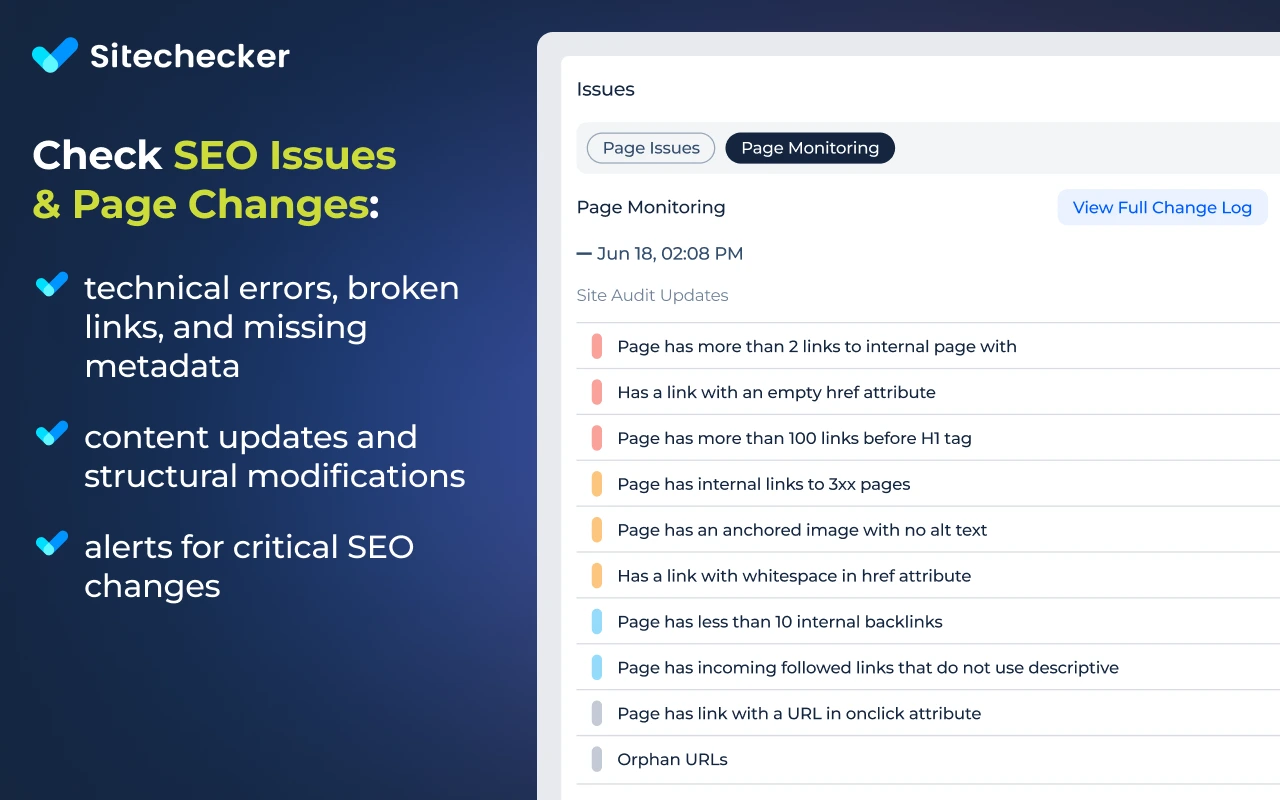
Sitechecker audits a page’s technical SEO health including status codes, page speed, meta tags, headings, and structured data. It flags issues with a clear priority rating, which makes it practical for working through fixes systematically.
I do not use this one as frequently as the others on this list, but it is worth having installed for situations where you need a structured technical overview of a page without running a full site crawl.
15. Check My Links (Personal Recommendation)
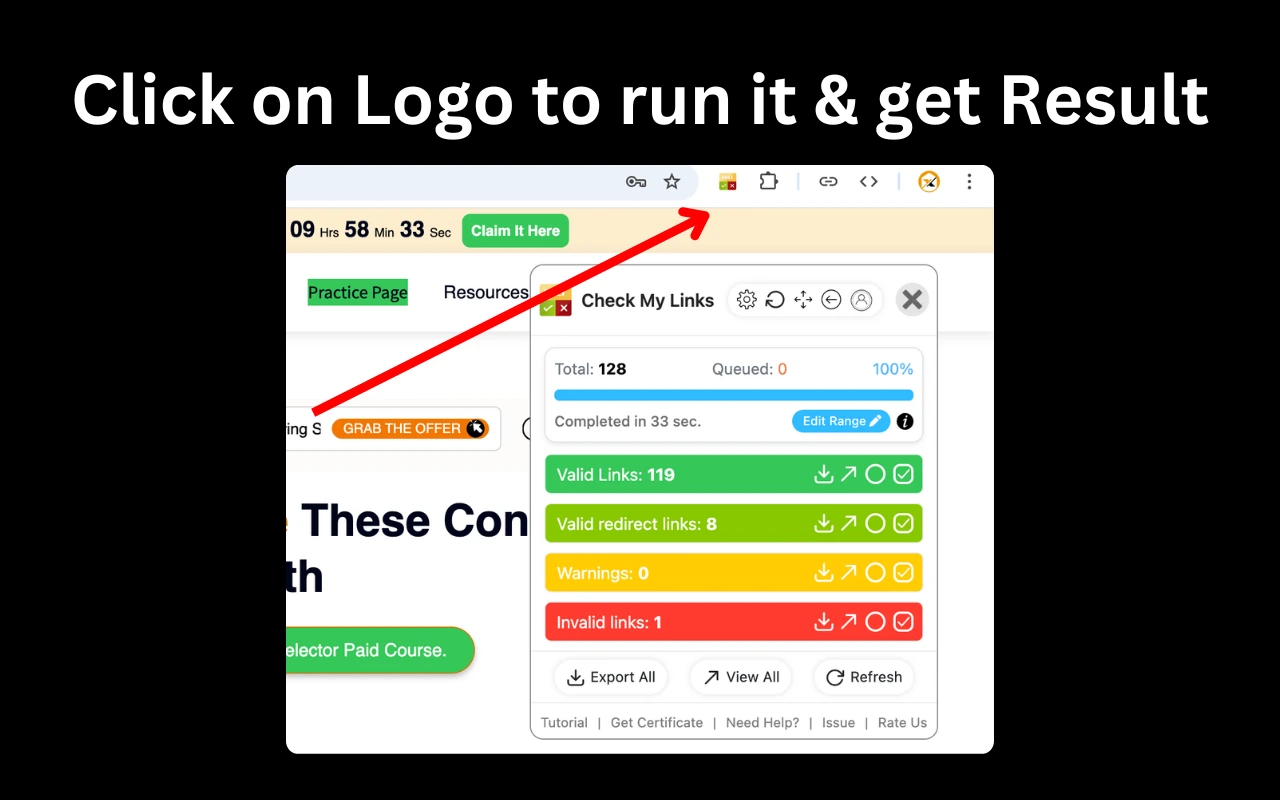
Check My Links scans the current page for broken links and highlights them in red, while valid links show in green. It covers both internal and external links, so you can see at a glance which links on the page are working and which need attention.
I use it when investigating a page’s link structure, checking internal links are pointing to the right places and external links are not returning errors. It is fast, requires no configuration, and saves significant time compared to checking links manually. For anyone doing regular content audits or building out internal linking structures, this is one of the most practically useful extensions on this list.
Conclusion
The right Chrome extensions will not do the SEO work for you, but they do make the process faster and more consistent. The 15 tools above cover the main areas of SEO work across keyword research, on-page analysis, backlink assessment, and technical checks.
On a typical day I usually have SEO Pro, Check My Links, and Keyword Surfer running simultaneously. SEO Pro for a quick page overview, Check My Links to catch any broken links, and Keyword Surfer to keep an eye on search data while browsing. Between those three, most of the day-to-day checks are covered without needing to switch platforms constantly.
If you are just getting started, Plerdy and Check My Links are the two worth installing first. Between them they cover the most common checks with the least setup required.
If you want help putting an SEO strategy together for your business or website, feel free to reach out via WhatsApp. I am happy to discuss what would work best for your situation.